 THE SCHOOL OF CHARITY - Meditations on the Christian Creed. By Evelyn Underhill. Published by
Longmans, Green & Co., London, New York, Toronto. First published 1934. -
Prepared for katapi by Paul Ingram 2005.
THE SCHOOL OF CHARITY - Meditations on the Christian Creed. By Evelyn Underhill. Published by
Longmans, Green & Co., London, New York, Toronto. First published 1934. -
Prepared for katapi by Paul Ingram 2005.

 Listen
to this beautiful rendering of the traditional Negro Spiritual "Steal Away"
by Clare College Choir. Music details HERE.
Listen
to this beautiful rendering of the traditional Negro Spiritual "Steal Away"
by Clare College Choir. Music details HERE.
I will ask of God such an enlargement of soul,
that I may love him with ardour,
serve him with joy,
and transmit his radiance to the world.
– Elizabeth Leseur.And after long woe suddenly our eyes shall be opened;
and in clearness of light our sight shall be full.
– Julian of Norwich.
THE Christian account of the nature of Reality ends with a declaration of absolute confidence.
I look for the resurrection of the dead,
and the life of the world to come:
or, more literally, "I expect the life of the age that is drawing near."
I expect Eternity as the very meaning and goal of all full human life,
and especially of the Christian art of living.
I expect it because I have already experienced it;
if not in my own person, then by my share in the experience of the Saints.
Let us press on to perfection,
says the writer of the Epistle to the Hebrews,
because we have tasted of the heavenly gift and the powers of the world to come.
The closing phrases of the Creed call us
to ascend in heart and mind to the world of the Eternal Perfect,
the Thought of God,
the Country of Everlasting Clearness,
and find the meaning of existence there.
It is as if the soul said,
"I believe in and utterly trust one living Perfect God,
and His creative purpose, His ceaseless action.
And because of that –
because I have glimpsed the sparkle of His mysterious radiance
and heard the whisper of His inexorable demands –
I trust and go on trusting,
in spite of all disconcerting appearances,
my best and deepest longings.
I expect the fulfilment of that sacramental promise which is present in all
beauty:
the perfect life of the age, the world, that keeps on drawing near.
I look past process and change, with all their difficulties and obscurities,
to that Perfection which haunts me;
because I know that God is perfect, and His supernatural purpose must prevail."
So, since the Christian life of prayer looks through and beyond Time towards
Eternity,
finds its fulfilment in Eternity,
and ever seeks to bring Eternity into Time,
the note that we end on is and must be the note of inexhaustible possibility
and hope.
Because we believe in the Eternal God, whose very nature is creative Charity,
we believe in and expect the fulfilment of His Plan;
the hallowing of the whole Universe, seen and unseen.
He is there first, the Fountain of life and of generosity;
and therefore the travail of the worlds that lie upon His bosom,
and are supported and penetrated by His Spirit,
can have no meaning unless perfection is their term.
It is true that in the course of this long history much will be discarded;
as much in our own lives is discarded –
often at the cost of pain –
as we move on.
Much that we, with our short sight and feeble telescopes, take for destruction
or ultimate loss,
is a phase in His deep work of transmutation:
a necessity, an austerity, of love.
But beyond every apparent death is a life.
I expect resurrection.
God is the Lord, through whom we escape death,
says the Psalmist:
we enter with our full surrender to His action another level of being,
where
our lives are fulfilled in His life.
Whosoever shall leave all for my sake
shall receive in this world a thousandfold,
and in the world to come life everlasting.
That is one of those promises of which all can see the fulfilment here and
now.
For what the human spirit desires above all in this world
is to have its being justified, to be used,
feel there is some meaning in that which it attempts and undergoes,
some place for it in the mysterious process of life.
And here those who relax their clutch on what we absurdly call "the" world,
and give themselves to the real world of charity, redemptive action, co-operation
with God,
do receive a thousandfold.
They receive an increasing and astonishing enrichment of existence,
a deepening sense of significance in every joy, sacrifice, accomplishment and
pain;
in fact, a genuine share in that creative life of God
which is always coming, always entering, to refresh and enhance our life.
Through the Christian revelation
men were shown, in a way that they could receive though never wholly understand,
the nature of that Absolute Love which moves to their destiny all stars and
all souls.
And the term of that process is the Eternal Life,
the perfect consummation which God has prepared for those that love Him;
in other words, all who really want it.
This is eternal life;
to know thee, the one true God –
have our eyes opened on the Fact of facts,
the soul's unique satisfaction,
Whom to know is to adore.
Christ in His great intercession asked only this for those He loved;
this real life, poised in God.
That they may be in us;
each tiny separate spirit absorbed in the mighty current of the Divine Charity.
I in them and thou in me, that they may be perfected into one;
this is the consummation we look for,
that share in the life of Reality which is prepared for men.
And further, the history of those souls
whom that living God awakens, besets,
and purifies by the action of His stern untiring love
is unintelligible unless
within that real life, all those faculties He is here bringing forth in them
achieve the perfection which here they never reach.
We are to expect the pure joy of a keen, unbaffled intelligence, of an unhindered
vision of beauty;
ears that can hear what the universe is always trying to say to us,
hearts
at last capable of a pure and unlimited love.
Then that sense of reaching forward,
of coming up to the verge of a world of
unbounded realities,
which haunts our best moments of prayer and communion,
will be fulfilled.
"I look for the life of the world to come,"
and see hints of it everywhere.
And surely Christians,
for whom the whole of life is ruled by a devoted faith in One God Whose nature
is Charity;
One Lord, His eternal Thought, self-given in sacrifice;
one Spirit, who is the Giver of all life,
have here a deep responsibility.
Working for,
trusting,
expecting the complete manifestation of that triune Love –
that is, the redemption of the universe –
must be the aim and motive of our inward and outward life.
The Body of Christ exists to work for the world's transformation;
to bring Eternal Life into time,
by the faithful and arduous incarnation of its faith and love in concrete acts.
It is an organ of the Spirit,
not a devotional guild.
So its efforts cannot cease till its frontiers embrace the whole created order
in its power, mystery and beauty:
till the whole of life's energy is running right,
sublimated, woven into that robe of many colours which clothes the Thought
of God,
and at the heart of the Universe,
ruling it in its most majestic sweep and in its homeliest detail,
we find His uttered Word and active Love.
This is the splendid vision on which our creed closes:
and it means that all the marvellous and varied energies of physical and mental
life,
as well as those we attribute to spiritual life –
all devoted service of beauty and truth,
all heroic adventure,
all the mysterious splendours of music and art –
can become part of the Divine triumph and serve the Divine end.
However adverse conditions may seem to be,
Christians must never deflect from this aim through weariness, or religious
self-indulgence;
never doubt its ultimate achievement.
The cynical or pessimistic attitude,
silent acquiescence in second-rate standards of thought or action,
selfish politics tending to war or hatred,
incomes drawn from dubious industries,
all public or private manifestations of pride, anger, envy, greed –
these things are impossible for Christians;
they are betrayals of trust.
In one or other of these departments every human life, however humble,
can do something to hasten or retard the triumph of the Eternal Charity.
For God is not the God of the invisible creation alone.
The new, more real life that we expect must penetrate every level of existence,
and every relationship –
politics, industry, science, art,
our attitude to each other,
our attitude to living nature –
spiritualizing and unselfing all this;
subduing it to the transforming action of "the intellectual radiance full
of love."
This is the work which has been delegated to us, energetic spirits created
in the image of the Absolute Charity, and placed within His half-made world
to further His plan;
and we are required to begin now.
Faith is not a refuge from reality.
It is a demand that we face reality, with all its difficulties, opportunities
and implications.
The true subject-matter of religion is not our own little souls, but the Eternal
God and His whole mysterious purpose, and our solemn responsibility to Him.
Ye are of God, little children;
greater is He that is in you than he that is in the world.
It is within our power to bring in the Kingdom, if our courage and generosity are equal to our faith.
There it is, in its eternal power and beauty.
Angels and Archangels, energies and worlds –
the ever-widening universe which science discloses to us,
and the more mysterious, more deeply sacred worlds
which are glimpsed through the veils of beauty and holiness –
all centred on the Word, the Thought of God,
nourished and supported by His unmeasured Charity.
And we,
being made children of God and of the Light,
are committed to a steady, loyal effort in our own small place and way,
to
the ever more perfect incarnation of that Kingdom in space and time.
Each Godward glance translated into sacrificial action,
each deed inspired
by generosity,
each deliberate contradiction of self-interest and self-will,
helps it on.
In some way each of us must set our hands to this,
if we desire to take up our birthright as children of God.
If we refuse –
if we do not at least try to manifest something of the Creative Charity in
our dealings with life,
whether by action, thought or prayer,
and do it at our own cost –
if we roll up the talent of love in the nice white napkin of piety
and put it safely out of the way,
sorry that the world is so hungry and thirsty, so sick and so fettered,
and leave it at that:
then, even that little talent may be taken from us.
We may discover at the crucial moment that we are spiritually bankrupt.
From him that hath not shall be taken away even that which he hath.
It is a critical moment now for the Church of Christ;
and that means for each Christian, since we are the Church.
It is for us to show the puzzled and uneasy world
the saving nature and practical
import of that revelation of Reality made in Christ;
a revelation which only
becomes convincing to others
in the degree in which we suffer for it,
take risks for it,
give it priority
over self-interest and self-will.
This is our terrible privilege.
If we do not exercise it,
no one else can.
These know that thou didst send me.
They know that the Divine Immanence is really the Divine Charity;
and only by dwelling in Charity, unlimited generosity,
can they dwell in Reality, in God.
On us, then, lies the full responsibility of declaring this spiritual standard
and working for this spiritual goal;
the life of the age that is drawing near.
This obligation is to be looked at in the most concrete and practical way.
Large thoughts about world-movements usually bring the comforting conviction
that we cannot do much about them ourselves.
But the greatest of all world-movements began with a handful of devoted and
confident souls,
who risked all for their belief and their love;
who knew they possessed something and therefore were willing to give it;
who were looking all the time, with an absolute and trustful certitude, for
more abundant life.
The Creed, which is the rule of our prayer, requires of us this same attitude,
because we too believe this about God.
If history is the dramatic expression of mankind's corporate thinking and
striving,
beyond and within all that corporate thinking and striving
is the
immense energy of man's corporate faith and prayer;
the trustful stretching out towards an unseen Reality,
the humble Godward life
of countless souls.
That inarticulate aspiration,
that " blind intent" as the mystics say,
always reaching out to the deep fountains of eternal peace,
is a factor of which we seldom think enough.
Yet here is man's deepest contact with that unmoved Truth in which the created
order is immersed,
and which is ever seeking fresh channels whereby to enter, cleanse and refresh
the world.
To become such a channel is the chief aim of the interior life.
We shall only achieve it if a trustful adoration and a limitless self-offering
govern our prayer,
more and more laying open the very depths of our being here and now
to the pressure of that Unchanging God,
Who accomplishes His creative work by means of those very creatures He has
made.
It is in the midst of time,
with the clock ticking, the engagement-book bristling,
the tube running a two-minute service,
and every new edition of the paper recording
some new movement, new sin, new sorrow of the restless world,
that we have
to find and live that eternal life, which consists in the disclosure of the
Divine Charity.
We are to bring forth the "fruits of the Spirit" here and now,
enmeshed
as we are in the complex anxieties of our material and emotional life;
ever
holding tight to the deep tranquillity of that Unchanging God
who comes to
us in the "sacrament of the present moment,"
and meeting and receiving
Him there with gratitude,
however baffling the outward form of that sacrament
may be.
Our whole life is to be poised on a certain glad expectancy of God;
taking each moment, incident, choice and opportunity
as material placed in
our hand by the Creator
whose whole intricate and mysterious process moves
towards the triumph of Charity,
and who has given each living spirit a tiny
part in this vast work of transformation.
It is a real part, even though its precise character and importance may not
be clear to us;
though we may not perhaps see much result from it during our own short span,
or have any clear view of the strange design from which the hidden Artist is
working.
We should elude much enfeebling spiritual worry,
and proportionately increase
our effective contribution to the world's redemption
if we kept more steadily
in mind the patent fact of our own limited knowledge:
that the richness and splendour of the spiritual universe
which surrounds and
penetrates our narrow universe of sense
is mostly unperceived by us as we are
now.
It is true that as spirits, anchored to this world yet belonging to that,
we
do already live within that spiritual universe.
But like new-born kittens, our eyes are not yet opened to our situation;
we can only vaguely recognize the touch upon the fur.
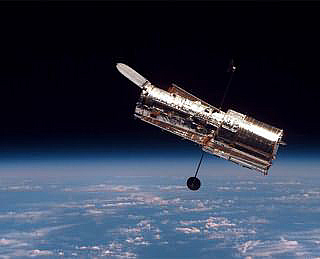
The narrow limits within which even the physical world is accessible to us,
might warn us of the folly of drawing negative conclusions about the world
that is not seen.
We cannot penetrate far into the reality of any life other than our own.
The plants and the animals keep their own strange secret;
and it is already a sign of maturity when we recognize that they have a secret
to keep,
that their sudden disclosures of beauty,
their power of awakening
tenderness and delight,
warn us that here too we are in the presence of children
of the One God.
With what a shock of surprise, either enchantment or horror,
we meet the impact of any truly new experience;
its abrupt reminder that we do really live among worlds unrealized.
Our limited spectrum of colour,
with its hints of a more delicate loveliness beyond our span,
our narrow scale of sound:
these, we know, are mere chunks cut out of a world of infinite colour and sound –
the world that is drawing near,
charged with the unbearable splendour and music of the Absolute God.
And beyond this,
as our spiritual sensibility develops,
sparkles and brief intoxications of pure beauty,
and messages from the heart of an Unfathomable Life come now and then to delight
us:
hints of an aspect of His Being which the careful piety that dare not look
over the hedge of the paddock will never find.
All this, then, should warn us that humility and common sense both require
an attitude
of loving ignorance,
of trustful acceptance,
as regards that supernatural
life which is always pressing in on us,
always waiting for us;
as truly there as the cosmic life of infinite space and duration into which
we are suddenly caught,
when we look for the first time through a great telescope
at the awful galaxy of the stars.
The stay-at-home Englishman,
going for the first time to great mountains,
cannot know or guess the true quality of the experience which lies before him.
All the guide books and photographs –
even the strange exciting literature of Alpine adventure –
tell him little or nothing of that enlarging, humbling, cleansing and exalting
revelation,
which comes from fresh and personal contact with a wholly new aspect
of our world.
There it is, in its majesty and aloofness:
waiting for him, living its own life,
but only to be apprehended by those who make the venture of faith.
So too the Mystery of God remains a mystery.
We believe in,
we cannot yet conceive in its independent splendour and reality,
that world which in moments of communion we feel to be very near.
The life which is ruled by its own deep longing for God,
and is really moving
in the direction of God,
is always moving towards that Country.
But it is not easy to realize
that,
while the train with its unexhilarating
apparatus of sleeping berths and restaurant cars
runs through long tunnels
and cuttings, and over interminable stretches of agricultural land.
When the traveller enters Switzerland, and draws up the blind –
perhaps somewhere near Berne –
in the early morning, he may see on the far horizon a line of snow.
To his tired eyes it does not look very much:
a sign perhaps, but a sign that is very far away.
Yet somehow, that white line calms, refreshes and exhilarates, for it proves
that he is getting there;
that he is, after all, living in a world which is not all tenement dwellings,
factories and potato fields,
not entirely subdued to the requirements of the
pumping station and electric grid.
The majesty of the eternal snow is really there.
He glimpses the substance of things hoped for,
the evidence of things not seen.
What we call "religious experience" is rather like the pulling up
of that blind.
As the train rushes on, or lingers in sordid stations covered with advertisements
and entirely destitute of any view,
that glimpse reminds us of the solitude
and awful beauty of the spiritual summits;
the demand on the utmost endurance of those who are called to them,
the long and steady climb, the risks, the hardships,
and the unspeakable reward.
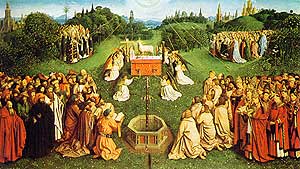
It is true that we cannot conceive all that it means and all that it costs
to stand in that world of purity and wonder from which the saints speak to
us;
those high solitudes where they taste the mountain rapture,
the deeply hidden
valleys with a vista of white splendour at the end,
the torrents of living
water, the quiet upper pastures, and the tiny holy flowers.
But because we believe in One God,
the Eternal Perfect,
His love and faithfulness and beauty,
so we believe in that world prepared for all who love Him;
where He shall be All, in all.